


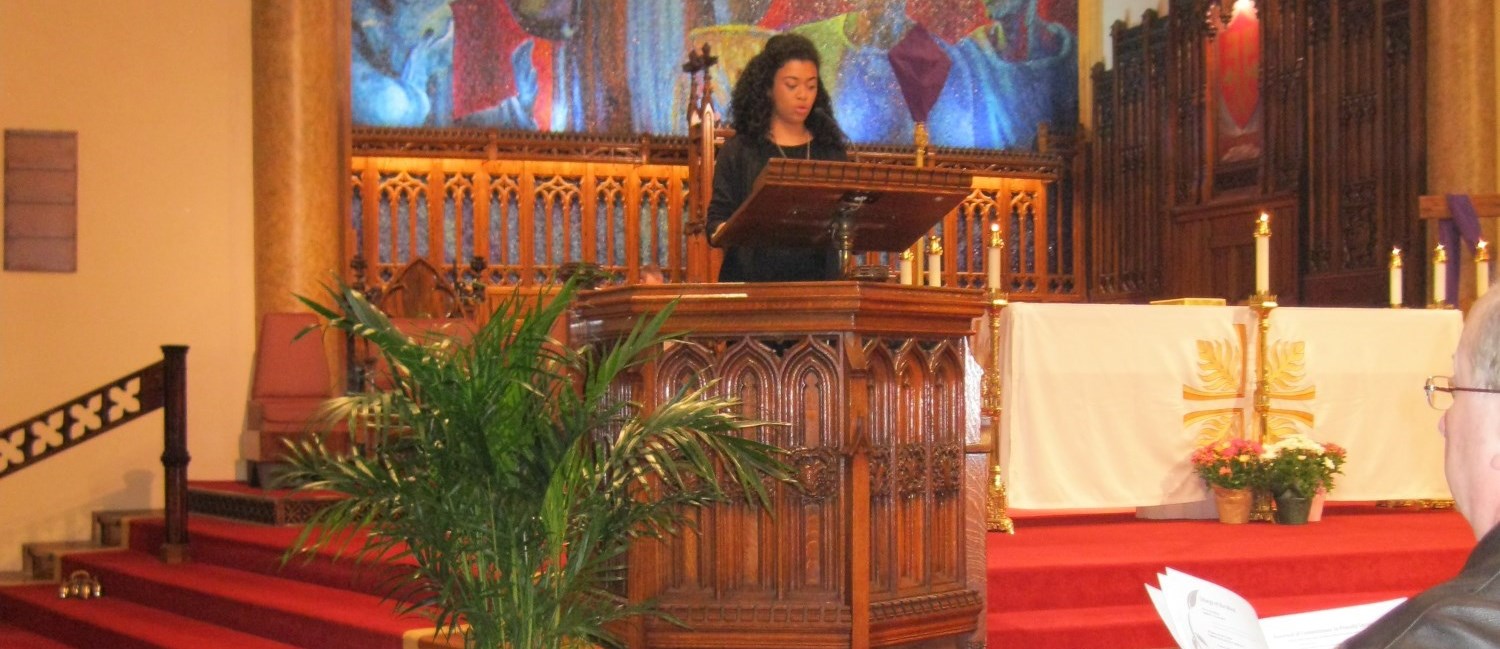


Reader
Reader, Lector, Minister of the Word
Ministers of the Word proclaim Scripture and the Universal Prayer for liturgical celebrations, primarily Sunday Mass. Ministers of the Word must be baptized, practicing Catholics. Public speaking skills are required. This ministry requires ongoing commitment to study and prayer with the Word of God.
Prayer
Find a quiet spot at the parish. Sit or kneel and pray to the Lord. You might ask that He make you a worthy vessel for proclaiming His message and that His people hear His voice. Ask the Holy Spirit to be with you as you faithfully proclaim His Word.
Approaching the Altar
The moment you step forward you are sending signals to your listeners. These signals come from how you carry yourself and what you wear.
Walk at a reverent pace, slower than usual. Dress with dignity and respect. The focus is on the reading, not the reader.
At the Ambo
Upon reaching the ambo, stand behind it. Place your hands lightly on the lectionary or ambo or you may hold the lectionary.
Proclaiming the Source of God's Word
The announcement line tells the faithful from whom or from where the reading comes, i.e. the prophet Isaiah or the Book of Psalms. Proclaim the announcement line loudly and clearly. Pause for a few seconds after the line is read. This will give the assembly a chance to actively listen to the passage.
Eye Contact
Proclaim the Word of God and look the faithful in the eye.
There are particularly good times for the lector to make eye contact with the faithful:
- when the lector first gets to the ambo
- when the announcement line is read
- at the end of a sentence
- during key words or phrases
- when reading the closing line (i.e. "The Word of the Lord")
Pronunciation
There are basic pronunciation guides available that phonetically spell out the pronunciations of the Biblical names of people and places. Also, the lector workbook provides guidelines for pronunciation for many, though not all, historical names and places in the readings. Consult at least one of these sources as you prepare your reading and practice so you feel comfortable with the pronunciation.
Enunciation
Enunciation is different from pronunciation. Enunciation involves using the tongue, lips and teeth to phonetically make the correct sounds of a word. Enunciation means that the speaker clearly articulates all the sounds that make up the word. Practicing the Reading will improve the Lector's comfort with enunciation.
Rate
Rate refers to how quickly or slowly the Reader proclaims God's Word. The best rate for a particular passage depends on the content of the reading but as a general rule, lectors should proclaim at one-half their normal speaking voice. Slowing down helps achieve clearer pronunciation and enunciation.
Volume
Remember to project the voice when proclaiming the Word of God and to speak louder than the normal conversational volume.
The key to projecting effectively is
- proper breathing
- increased volume
- correct microphone usage and
- confidence.
Microphone Usage
It is crucial to find just the right spot or zone that will enable you to maximize your volume without creating explosive or popping sounds. Practice proclaiming the Word of God at the parish using the microphone that is in place there.
Pausing
Silence is very important to support the reverence for God's Word and the prayer of the faithful.
Usual places to pause for a moment of silence:
- when the reading is changing direction
- to allow the faithful to absorb an important point
- to provide space between multiple thoughts in the same sentence
- to take a breath
- before and after quotes to offset the quote from the character or narrator
- after the announcement line "A Reading from."
- before the closing line, "The Word of the Lord"
- during the Universal Prayer if there are times when the faithful is invited to pray for their own intentions.
"The Word of the Lord"
The closing line is actually the most important line in every reading because it reminds us that God is speaking directly to us. He may be using a human voice but the words and the message are His. Take care with this line. Speak it loudly and clearly. Look the assembly in the eye when you proclaim the ending. Give its significance time to sink in. After all, this message that you proclaimed is directly from God. It should leave the faithful with a sense of awe.